When people in Colorado Springs search for help, the phrase “near me” is more than convenience—it is about finding a fast, reliable expert who understands our altitude, wind, and fluctuating weather. This local-first guide explains how to select the right provider, what to expect during a visit, and how to prepare your home so the job goes smoothly. Whether you live up by the Air Force Academy, near Old Colorado City’s historic homes, or around the Broadmoor’s hillsides, the right approach begins with clarity on scope, safety, and communication. If you are eager to get on the calendar for the burn season, you can arrange chimney cleaning early to ensure a convenient appointment time.
Colorado Springs presents a unique blend of appliance types and roof designs. Newer developments often feature factory-built chimneys with decorative surrounds, while older neighborhoods contain classic masonry stacks with character—and quirks. Our famed Pikes Peak winds can drive ash and debris into caps, and the city’s rapid temperature swings test flashing and mortar. A team familiar with local neighborhoods brings that background knowledge to your doorstep, turning a routine appointment into a tailored experience.
What “Near Me” Should Mean in Practice
Proximity is not just distance; it includes responsiveness, local code awareness, and familiarity with common house styles and materials. A nearby provider knows how high winds funnel through specific foothill streets, which subdivisions feature steep tile roofs versus asphalt shingles, and how altitude influences draft behavior. When a professional has cleaned hundreds of chimneys across the Springs, they anticipate access challenges and arrive with the right equipment the first time.
- Local familiarity: Knowledge of common roof pitches, cap styles, and chase covers found in area builds.
- Weather readiness: Ladders, anchors, and protective gear suited for gusty conditions and sudden showers.
- Efficient scheduling: Realistic arrival windows considering traffic patterns and neighborhood access.
- Relationship building: A nearby team becomes your seasonal partner, not a one-off visitor.
Preparing for Your Appointment
Before your visit, avoid using the fireplace for at least 24 hours so surfaces are cool. Clear fragile decor from mantels and the hearth. Provide driveway access if possible, and secure pets in a comfortable room. If you have experienced smoke roll-out, draft reversals, or odors during wet weather, jot down when it happens; those details help the technician diagnose root causes. If your home has multiple fireplaces or a stove plus a separate flue for a furnace, let the scheduler know in advance so adequate time is reserved.
It is also helpful to gather any prior service reports or photos. Visual history allows the technician to compare conditions over time, spot developing trends, and prioritize recommendations. If you have a factory-built unit, note the brand and model from the data plate if accessible. For masonry units, photos of the exterior stack and crown taken from the ground can inform pre-visit planning.
What Happens During a Professional Visit
A reputable Colorado Springs sweep will begin with a conversation to confirm appliance types, usage patterns, and any concerns. They will protect surrounding areas with clean coverings, stage a HEPA-filtered vacuum to control dust, and deploy tools matched to your flue and appliance. For open fireplaces, they will brush the flue, clean the smoke chamber and smoke shelf, and check the damper. For inserts and stoves, they will remove baffles as needed, address connector pipes, and confirm gaskets seal properly. For gas units, they review logs, burners, and the venting path for corrosion or blockages.
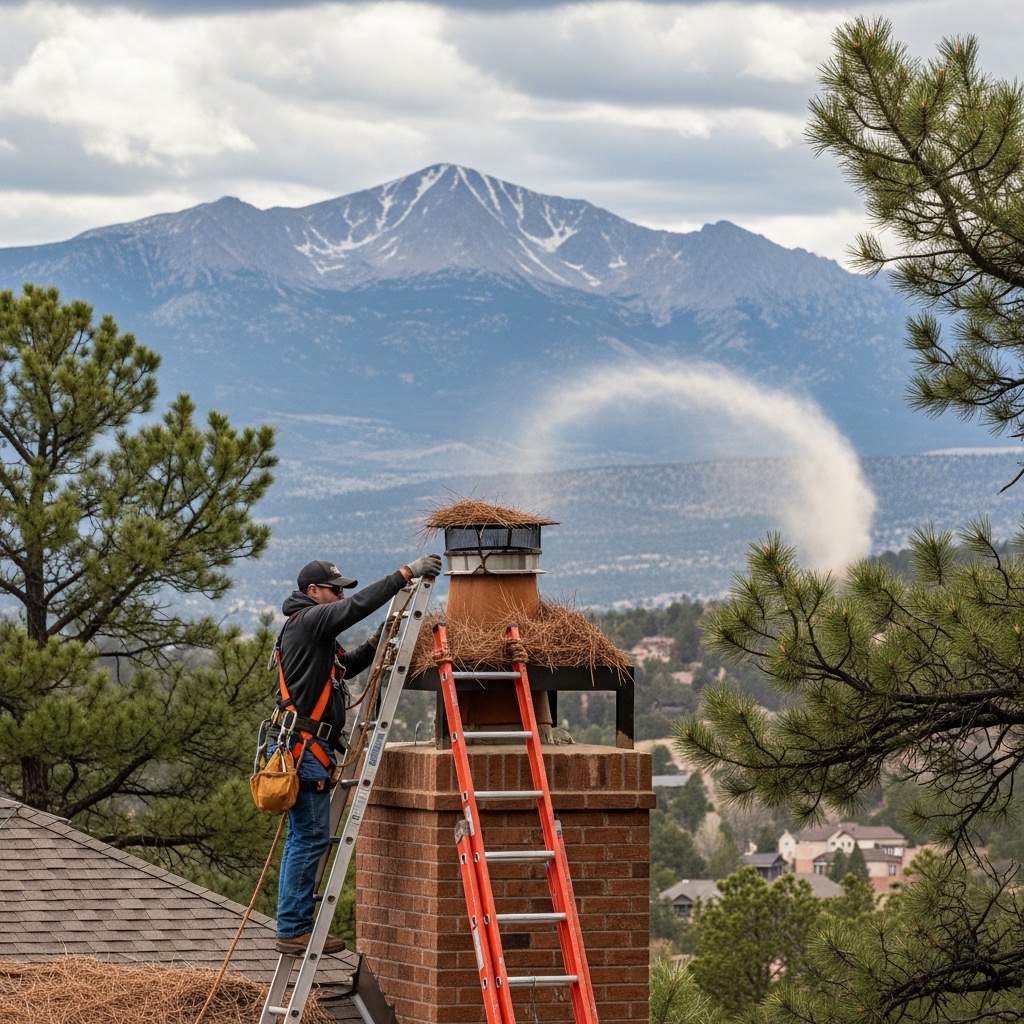
Roof work includes inspecting the termination: caps, screens, and chase covers or crowns. The sweep checks the flashing where the chimney meets the roof—a common leak point during winter melt. On steep or high roofs, anchor points are chosen for safety. Where appropriate, a camera may be used to document liner condition and to provide a record for your files.
Colorado Springs Climate and Its Impact
Our city sits at elevation with low humidity. Fires start quickly but can produce significant smoke during the first minutes, particularly if draft is sluggish on a cold flue. When nights turn frigid, metal components contract and can reveal small gaps that merit attention. Spring winds carry grit and pine needles that can clog cap screens. Hail can dent chase covers and loosen fasteners. The more your professional understands these patterns, the more targeted their recommendations will be.
Wildfire smoke that visits the Front Range from time to time also leaves residue. Even if you have not burned much, your system may carry odors that call for a thorough pass with appropriate brushes and vacuums. If your home is near treed lots or open spaces, birds and small mammals may see your chimney as prime real estate; a proper cap with the right mesh discourages nesting while supporting airflow.
How to Choose a Nearby Expert
Look for a track record: satisfied customers, clear communication, and transparent procedures. Ask prospective providers to explain their process from floor coverings to roof safety. Inquire about certifications and ongoing education. Confirm they can service your specific appliance type—masonry fireplace, insert, wood stove, pellet stove, or gas log set. A professional should be able to describe what documentation you will receive after the visit and how they prioritize any recommendations.
Responsiveness is another key. When you reach out, note how promptly the team replies, how thoroughly they answer your questions, and whether they collect enough information to plan the right amount of time. A neighborly mindset shows up in little details: tidy uniforms, careful handling of ladders around landscaping, and patience in explaining findings. Mid-season openings can be limited; many households like to schedule professional chimney cleaning just after the holidays or as winter transitions to spring.
Common Recommendations and Why They Matter
Beyond the cleaning, you may hear about protective measures. A robust cap deters animals and keeps wind-blown embers in check. A well-sealed crown or chase cover sheds meltwater and protects the structure below. Flashing touch-ups preserve the roof interface. For older masonry, repointing weakened mortar can prevent moisture intrusion that leads to interior staining. For gas appliances vented through masonry, a properly sized liner mitigates condensation and corrosion.
Inside, smoke chamber smoothing reduces turbulence that can trap soot, while new gaskets on stove doors restore airtight control over the fire. For pellet systems, attention to elbows, tees, and clean-outs is essential because ash collects at these points. The goal of each recommendation is to align your system with the demands of our local climate and your usage patterns.
Safety Essentials Every Local Should Know
- Install and test smoke and carbon monoxide alarms on every level.
- Keep combustibles and decor at safe distances from the hearth.
- Use only seasoned wood; store it covered and elevated.
- Never burn trash, cardboard, or treated wood.
- Maintain proper clearances in mechanical rooms for appliances that share venting pathways.
- Have extinguishers accessible and know how to use them.
What to Tell the Scheduler
Clear details help the office plan: number and type of appliances, any roof access challenges, whether animals or odors have been present, and preferred times of day. If you have toddlers, pets, or remote work obligations, note that as well so the technician can coordinate with your household rhythm. Ask what to expect when they arrive, and whether a reminder text or call is available.
Day-of Tips for Smooth Service
Provide a clear path from the entry to the hearth. Move furniture or rugs as needed. If you have delicate items on the mantel, store them safely in another room. If the appointment includes a camera inspection, dimming the room can make on-screen images easier to see. As the technician works, feel free to ask questions—most pros enjoy explaining what they find and why it matters.
Understanding Draft and Odor
At altitude, a cold flue can resist initial draft. Preheating with a small roll of newspaper in the firebox, opening a nearby window slightly for make-up air, or using a top-sealing damper properly can help. Odor often relates to air pressure inside the home; kitchen and bathroom fans, clothes dryers, and tightly sealed windows can pull air down the chimney. Your sweep can suggest strategies tailored to your floor plan and appliance type to keep airflow moving in the right direction.
Frequently Asked Questions
How often should I book service in Colorado Springs? Many homeowners plan annual evaluation, with more frequent visits for heavy wood use. Gas and pellet units still require periodic checks even though their residues differ from wood.
Do I need a cap if I rarely burn? Yes. A cap keeps out animals, leaves, and rain. It also acts as a spark arrestor, an important safety feature in windy areas.
Will the job make a mess? Professionals use floor coverings and HEPA filtration to capture debris. After the visit, your living room should be clean and ready to enjoy.
Why does my fireplace smell in summer? Warm, humid air can pull chimney odors into the house when windows are closed and exhaust fans run. A thorough cleaning combined with airflow strategies usually reduces odors significantly.
Are camera inspections necessary? They are incredibly useful when symptoms suggest hidden issues, or when you want a baseline record for future comparison. Not every visit requires one, but documentation helps everyone understand the system better.
What about pellet stoves? Pellet appliances need attention to their unique venting, especially tees and elbows where ash accumulates. Regular professional care keeps motors, blowers, and pathways cleaner and more efficient.
Build Your Local Maintenance Rhythm
Think seasonally: schedule evaluations before or after peak burning, check the cap and flashing after windstorms, and keep a file of reports and photos. If you change fuel type or add an insert to an existing fireplace, tell your provider so they can adjust their approach. Over time, your “near me” expert becomes a trusted partner who knows your home’s nuances and keeps your system ready for cozy nights.
Bring Warmth Home in Colorado Springs
Your home deserves the attention of a neighborly specialist who values safety and clear communication. When you are ready, set up your next chimney cleaning with a team that understands our foothills weather, altitude, and roofs—and enjoy a hearth that performs beautifully all season long.